

28 September 2023 – Fabiënne Tetteroo
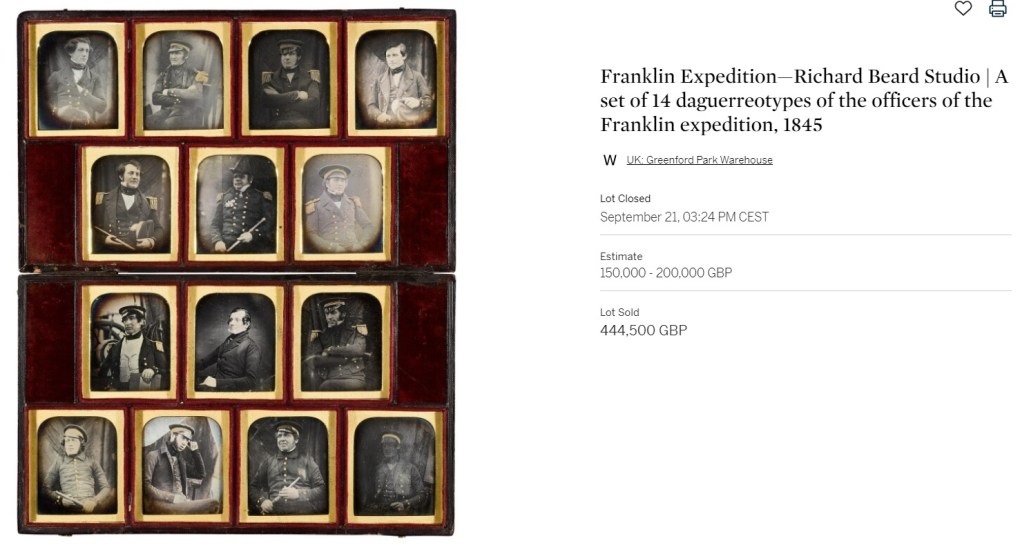
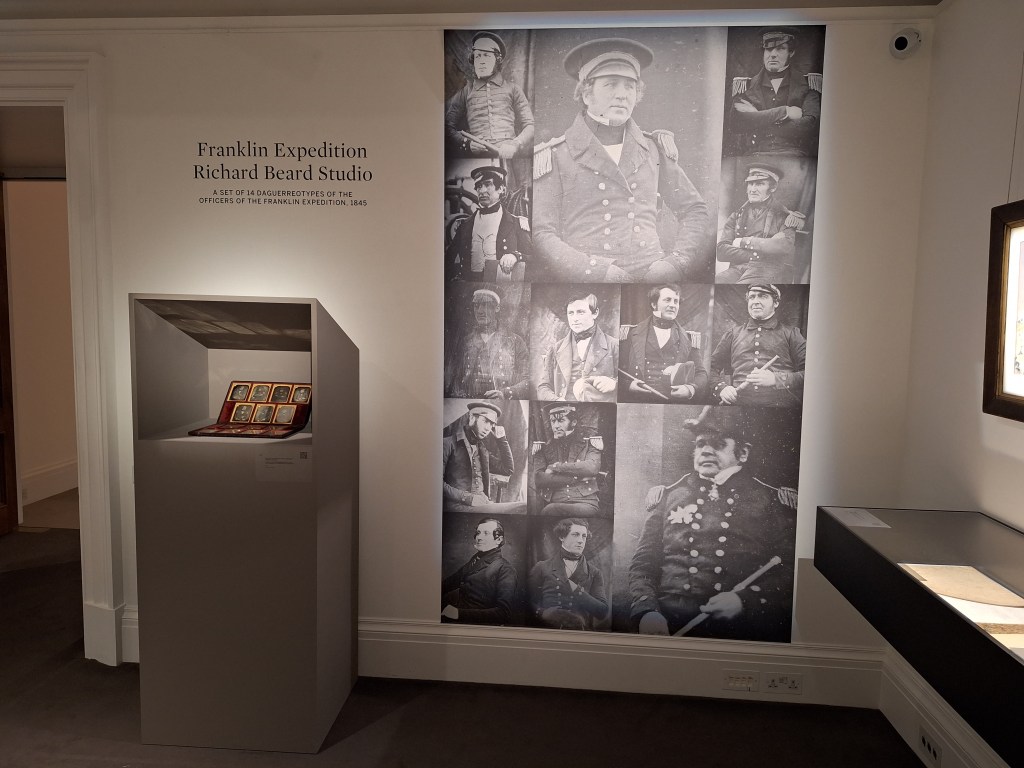
The exhibition at Sotheby’s 15-20 September 2023
On 21 September 2023 the Franklin Expedition daguerreotypes were sold for a staggering £444,500, probably to a private collector. I was watching the bidding live and the price went from about £240,000 to the final amount in the last few minutes of the auction. Time will tell if the buyer is willing to share these important historical portraits with the world again…
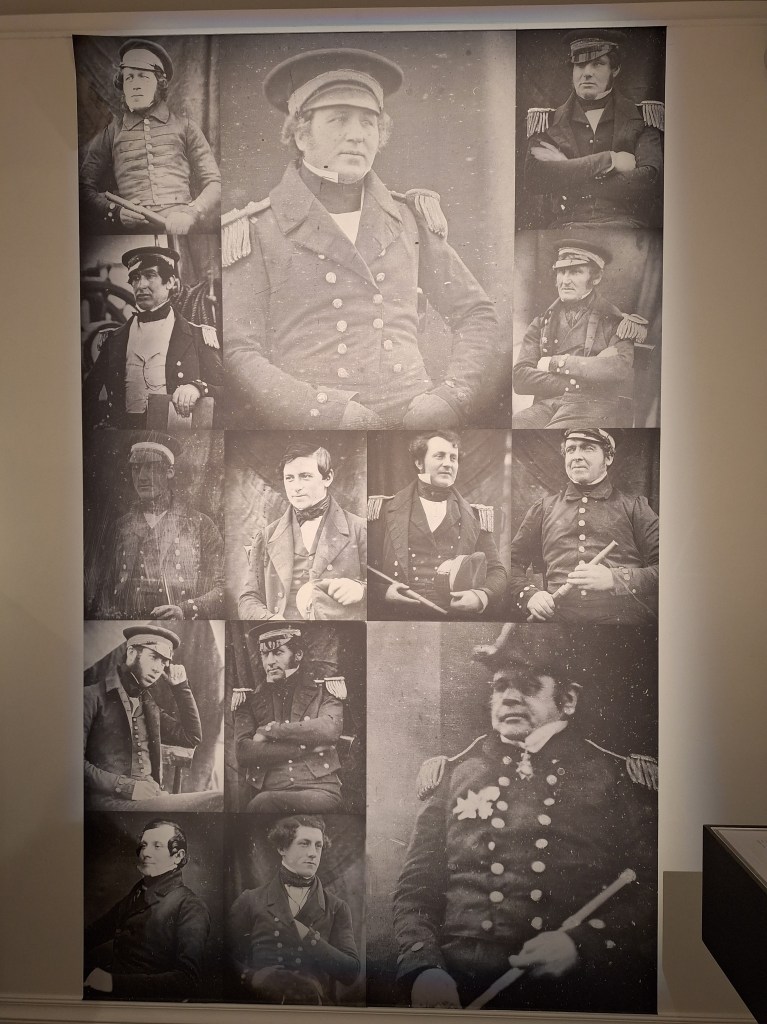
It was a unique opportunity to see the daguerreotypes exhibited at Sotheby’s before the auction and I was lucky enough to go twice. They were displayed in a grey display case that had no glass in it, so you could really put your face quite close to them. The wooden case smelled wonderfully old. From the pictures Sotheby’s published of the daguerreotypes I was inclined to think that the SPRI set was of a higher quality, but having seen the Sotheby’s set in real life I can say that their quality is very high indeed.
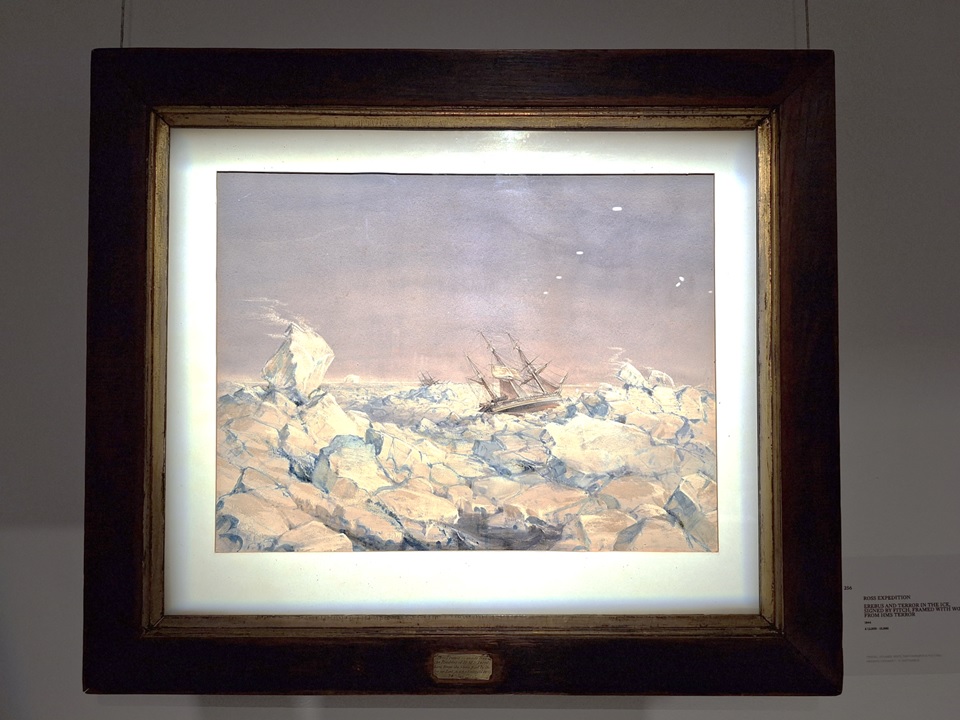
During the first day or two of the exhibition the contemporary paper with the sitters’ names on it was displayed next to the case with daguerreotypes. However the paper was quickly removed by Sotheby’s because in hindsight it was deemed too fragile to be on display. Because the lights were quite bright it was difficult to photograph the daguerreotypes. They are really intimate little portraits that should be held in your hand to gaze at lovingly. I took a few videos instead which turned out much better. High resolution pictures of the daguerreotypes are on Sotheby’s website in the auction catalogue, where I imagine they will stay even now that the auction is over. Appropriately, on the wall to the right of the daguerreotypes was a watercolour of HMS Erebus and HMS Terror stuck in the ice during the Antarctic Expedition (1839-1843). Something very special is that the frame is made from the Terror‘s rudder which had come lose by the ice. The watercolour ended up being sold for almost three times the estimated price.
[Pictures and videos taken by Fabiënne Tetteroo on 18 and 19 September 2023]


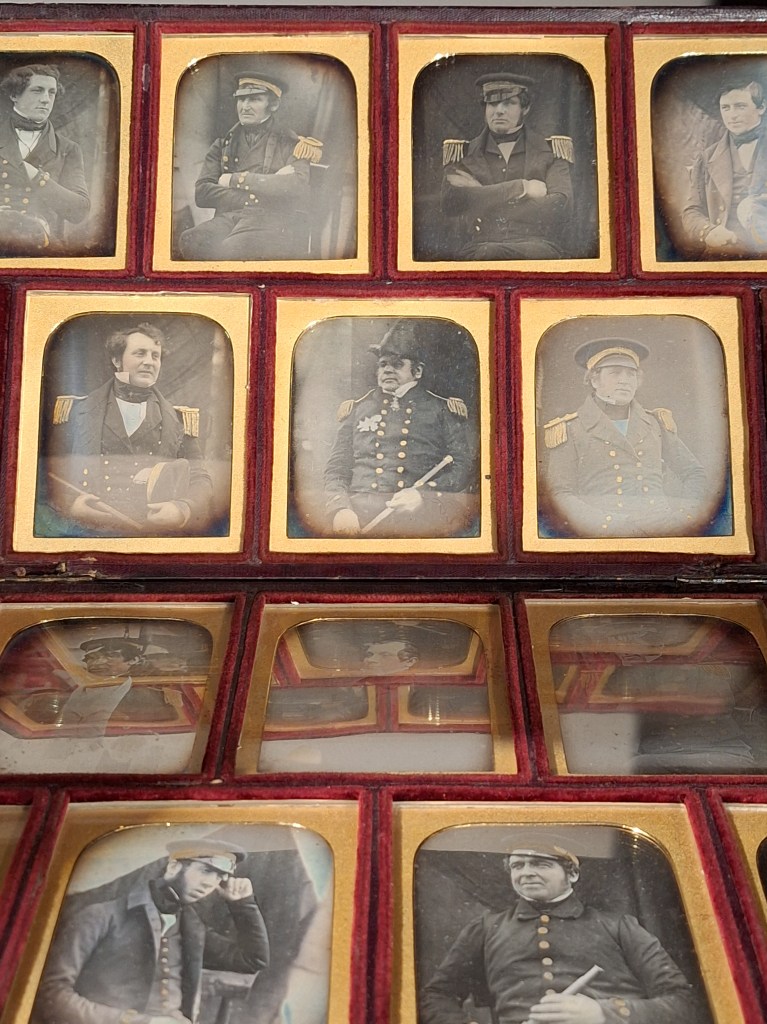
Video’s
Reversed? Not reversed? Copies?
After publishing Part 1 I received some very helpful comments from the knowledgeable people of the Franklin Expedition Facebook Group. Something that I had not considered in Part 1 of my discussion of the daguerreotypes is the placement of buttons and medals on Naval uniforms. Such things are regulated and can easily tell you if a portrait is reversed or not. But to make matters more difficult: Richard Beard’s daguerreotypes were apparently not reversed! In response to Antoine Claudet’s announcement of his new and improved non-inverted daguerreotype portraits, Beard retorted that his portraits had never been inverted thanks to the use of a reflector (mirror).
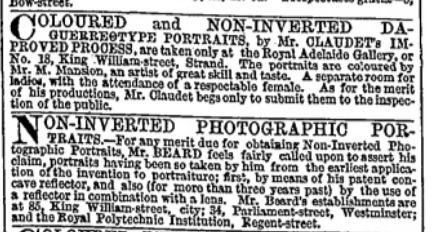
But what about daguerreotype copies of daguerreotypes, were they reversed? No, Beard also had an invention that had taken care of that problem. The following article however does not seem to know that Beard’s portraits were not reversed, and says that the copying apparatus will restore the portrait to its natural orientation:
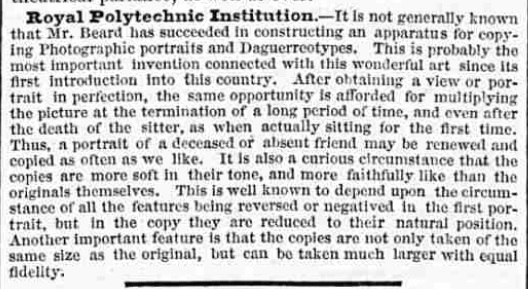
So this takes us all the way back to the drawing board. On a Naval uniform medals are to be worn on the left side, with the coat and waistcoat buttoned on the right (this is reversed in portraits). When looking at an earlier portrait drawing of Sir John Franklin and then at the two daguerreotypes of him, we see that in the Sotheby’s one (left) the buttons are correct but the medals are not, and vice versa in the SPRI daguerreotype:
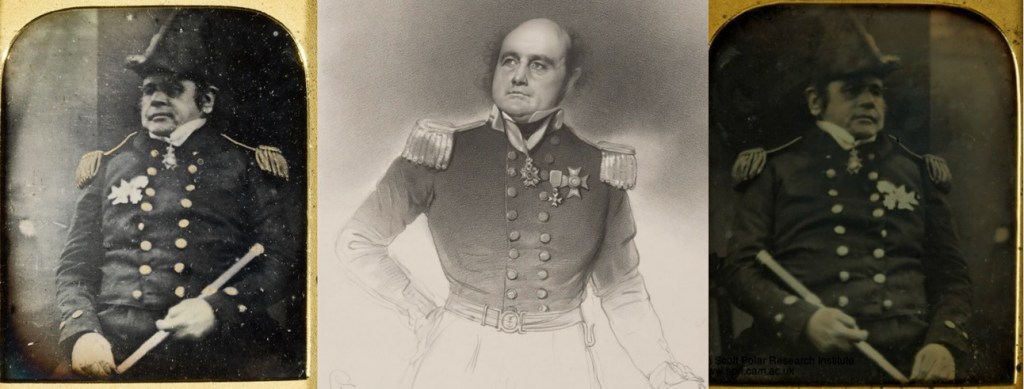
Middlet: Sir John Franklin by Thomas Herbert Maguire, printed by M & N Hanhart, after Joseph Mathias Negelen, lithograph (1837) NPG D37795 © National Portrait Gallery, London
Right: Sir John Franklin daguerreotype (1845) ©SPRI
We see that the two daguerreotypes of Sir John are mirror images of each other, which must mean that one of them is a daguerreotype copy and one is the original. But which one is which? With Sir John’s medals and buttons being wrong in both versions, it is very hard to tell. Beard claimed that his portraits were not reversed, but his copying technique restored the portrait to its natural orientation which in the case of the Beard dags would create a reversed image. If Sir John had embroidered versions of his medals, that he had had put on the ‘wrong’ side for the daguerreotype, then it might have been too much hassle to take them off and sew them on again on the other side. As an example, in the image below you can see Horatio Nelson’s coat with embroidered medals:
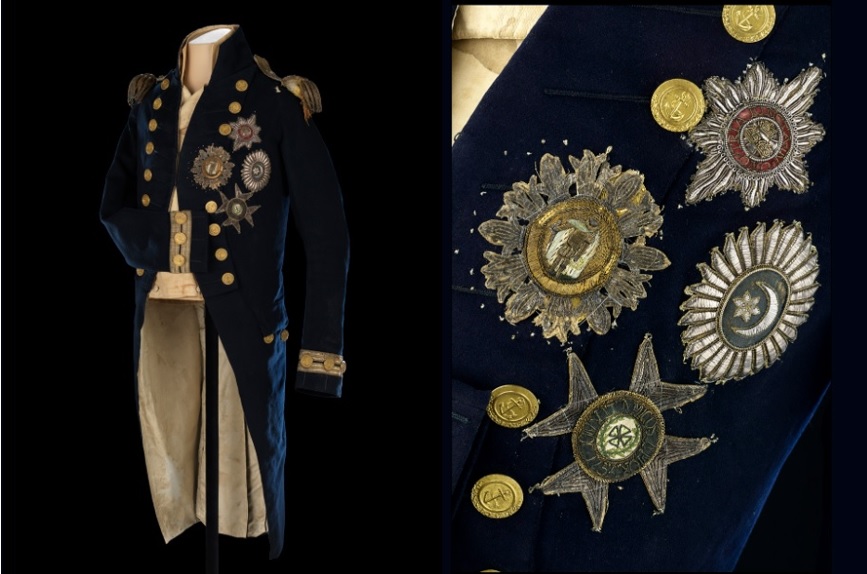
©National Maritime Museum, Greenwich, London, Greenwich Hospital Collection
In the Sotheby’s daguerreotypes set the portraits of Des Voeux, Fitzjames, Crozier, and Goodsir are reversed from the other portraits with their coats and waistcoats being buttoned the wrong way. If Beard’s daguerreotypes were not reversed, then these four would be copies. But if they were reversed, then all the rest are copies. After reading on the Daguerreian Society website that it was quite difficult to use a prism outdoors because a breeze could blur the image, I think that Richard Beard probably only used a prism in his regular studio where the conditions were optimal. With this in mind it would seem that no prism was used for the Franklin Expedition daguerreotypes, and the original portraits were reversed.
Even though it must have been quite novel and special for the officers to be photographed none of them described the photoshoot in detail, so all we can do is speculate based on the little information we do have. As for the Illustrated London News wood engravings, they seem more like interpretations of the daguerreotypes than literal copies. So the engraver could have worked with any version of the daguerreotypes. I am still confused.

[Edited 30 September 2023. Thanks Michael King Macdona & Russell Potter for your comments!]
 James Fitzjames